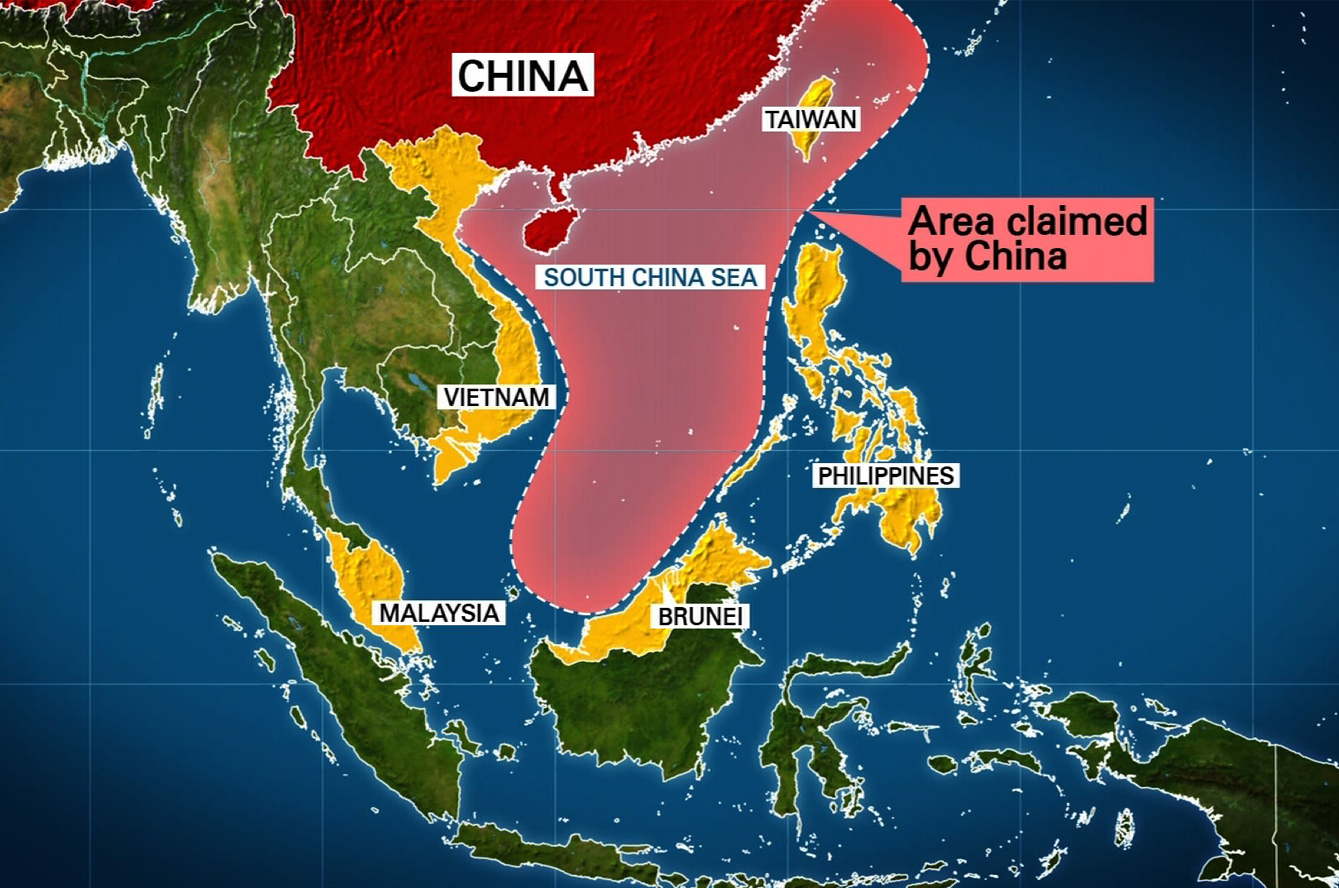
More than $9 billion worth of cargo crosses the South China Sea every day. This figure represents the world’s overwhelming dependence on a waterway. The South China Sea stands as the world’s most crucial maritime corridor, carrying nearly a quarter of global trade annually, valued at roughly $3.4 trillion. Military confrontations threaten to transform this vital shipping corridor into an economic battleground, forcing vessels into costly diversions that can add up to 40 days to transit times. 20-21% of the world’s petroleum passes through this region. Container ships carrying everything from Vietnamese coffee to Korean Semiconductors must now navigate between naval patrols asserting competing sovereignty claims over what has become the planet’s most economically vital and politically volatile shipping corridor.
The Arteries of Global Commerce
It is the lifeblood of Asia’s economic engine and a critical artery for the world, handling 45% of global crude oil shipments, 42% of propane, and 26% of automotive trade. In 2024 alone, tens of thousands of cargo vessels traversed these waters, carrying 40% China’s maritime trade. The SCS is not just a trade route, it is the fulcrum upon which global supply chains, energy security, and economic stability pivot. Regional dependency reaches extreme levels, with 90% of China’s maritime crude oil, 90% of Japan’s oil imports, and 90% of South Korea’s energy supplies flowing through South China Sea routes.
The scale of liquefied natural gas dependency adds another dimension of vulnerability. China, now the world’s largest LNG importer having surpassed Japan in 2023, routes 59% of its natural gas imports as LNG through South China Sea channels. When considering that China’s LNG imports surged 12.3 percent in recent years, any sustained disruption would create immediate shortfalls affecting global energy markets.
Tensions on the High Seas
Two Chinese vessels collided on August 11, 2025, near Scarborough Shoal in waters critical to global trade. A China Coast Guard ship hit a People’s Liberation Army Navy destroyer, causing serious damage to the coast guard vessel’s bow, according to CNN reports. The damaged ship was later seen undergoing repairs at China’s Hainan province naval base.
The incident triggered immediate responses from other nations. Within 48 hours, a U.S. Navy destroyer conducted a Freedom of Navigation operation near the same disputed area. Australia, Canada and the Philippines held joint naval exercises in the region days later. China analyst Euan Graham warned that these events show “how close we are to an incident that triggers a wider diplomatic and military crisis”
The collision occurred while the Chinese vessels were pursuing a Philippine fisheries boat, highlighting how routine maritime activities now involve multiple military forces. According to CNN reporting, China later claimed it “drove away” the U.S. warship that approached the area, demonstrating the rapid escalation patterns that concern shipping industry officials.
Beijing’s response to international criticism has been equally confrontational. In June 2025, China warned the European Union to stop “provoking trouble” in the South China Sea after EU foreign policy chief Kaja Kallas expressed concerns about Beijing’s activities in the region, according to Al-Jazeera, these diplomatic tensions compound the operational challenges facing commercial vessels, as shipping companies must now factor geopolitical risks into basic route planning decisions.
Vietnam has also increased its activities in the disputed Spartly Islands, with new construction projects that may exceed China’s land reclamation efforts, according to the Asia Maritime Transparency Initiative. These competing claims have created what maritime insurers call an environment of “elevated operational risk”. Commercial shipping companies now report increased delays and route changes to avoid areas with heavy military activity.
Insurance Costs and Premium Escalation
Marine insurers have responded decisively to deteriorating security conditions. War risk insurance premiums have increased 20 percent since 2024, with some routes experiencing even steeper hikes. The designation of certain South China Sea areas as higher- risk zones has pushed baseline war risk coverage from 0.1 percent of hull value to significantly elevated levels, with monthly premiums of Malacca Strait traffic alone estimated at $167 million under conflict conditions.
Maritime insurance companies now incorporate dynamic premium adjustments that can change weekly or daily based on geopolitical developments. The industry has adopted AI-driven underwriting processes that analyze real-time threat intelligence, vessel tracking data, and predictive risk scenarios to price coverage more accurately. These sophisticated systems enable insurers to respond rapidly to emerging threats while managing exposure across diverse risk profiles.
The Domino Effect: Commodity Prices and Global Prices
Disruptions in the SCS have immediate and far- reaching effects on global commodity prices. The region’s centrality to energy flows means that any delay or diversion can trigger price spikes in oil, LNG, and other critical resources. The IMF Commodity Data Portal shows clear correlations between shipping disruptions and price surges, particularly for energy and metals. In 2024-25, volatility in commodity markets was exacerbated by supply chain bottlenecks, with energy, metals, and agricultural products all experiencing significant price swings.
Semiconductor Supply Chain Vulnerabilities
Taiwan’s semiconductor dominance creates acute systematic risk. The island produces 60% of global chips and 90% of advanced semiconductors, with TSMC controlling the world’s most sophisticated fabrication capabilities. All raw materials and finished products depend entirely on South China Sea shipping routes, making the industry vulnerable to even temporary disruptions.
Geopolitical tensions, exports controls, and the threat of military conflict have prompted both industry and governments to prioritize supply chain resilience.
Companies are investing in new fabrication plants outside traditional hubs, building buffer stocks, and mapping supplier networks to identify vulnerabilities. However, progress is slow, 76% of firms cite a lack of alternative suppliers as a major barrier to effective risk mitigation. The SCS remains a critical chokepoint for the world’s most essential technology.
Major technology companies have acknowledged these risks through their supply chain diversification effort.
Apple, Samsung, and other electronics manufacturers have begun establishing alternative sourcing arrangements, though industry analysts note that Taiwan’s manufacturing capacity cannot be quickly replaced.
Alternative routes and their Limitations
When South China Sea tensions spike, commercial shipping turns to alternative passages through Indonesian waterways, primarily the Lombok, Sunda, and Makassar straits. However, these diversions impose substantial costs and operational challenges that highlight the irreplaceable nature of direct South China Sea routing.
The Lombok Strait adds 7-10 days to transit times between Northeast Asia and European markets, while the Sunda Strait frequently experiences congestion that can delay vessels by additional 18-24 hours during peak periods. These alternative routes also lack the depth and width to accommodate the largest container vessels and tankers, forcing operators to use smaller ships or partial loads.
The Malacca Strait, while remaining the primary alternative, faces its own constraints. During tension periods in 2024, waiting times at Malacca increased by an average of 20 hours as diverted traffic compounded normal commercial flows. The strait’s narrow 1.7-mile width at its narrowest point creates natural bottlenecks that cannot absorb significantly increased traffic volumes without creating delays throughout regional shipping networks.
Indonesian authorities have reported a 23% increase in commercial vessels transits through alternative straits during the first half of 2024, reflecting shipping’ companies efforts to reduce SCS dependencies.
However, these routes increase transportation costs by 12-18% per shipment while extending delivery times by up to two weeks for some destinations.
Economic Impact Projections and Future Scenarios
Quantitative modeling reveals potential catastrophic consequences. Complete South China Sea closure would force most commercial vessels to detour around Southern Australia, creating supply disruptions comparable to 1967-1974 Suez Canal closure. Taiwan would face real GDP losses of 34 percent, while Japan and South Korea would contract by 2-3 percent. China itself would experience 0.7 to 1 percent welfare reduction, though its vast domestic market provides relative insulation compared to smaller, trade- dependent economies.
Partial disruptions carry severe implications across the global economy. Economic analysis indicates that every country except Ireland would experience welfare losses from SCS closure, with average losses ranging from 6.2 to 12.4 percent for East Asian, Southeast Asian, and Pacific economies. The interconnected nature of modern supply chains means that even temporary disruptions would cascade through multiple industries simultaneously.
Conclusion
The SCS dispute transcends regional territorial disagreements to embody the collision between rising geopolitical tensions and interconnected global economics. With 3.36$ trillion in annual trade flowing through these contested waters, resolution of competing claims will determine whether the 21st century witnesses continued economic integration or fragmentation into competing trade blocs.
The statistics reveal uncomfortable truths about global economic vulnerability. When 80% of China’s energy imports, 90% of Japan’s and South Korea’s crude oil supplies, and 60% of global maritime trade depend on a single disputed waterway, the international community faces systemic risks that no individual nation can address alone.
For further reading and references
About the Writer:
Aimen Binte Abubakar is doing BS in International Relations from the National University of Modern Languages (NUML), Islamabad. Her academic interests center on regional conflicts, with a focus on understanding their causes, dynamics and implications for peace and security. She can be reached at aimenabubakar2004@gmail.com