
By JOHN POLANYI
The author is a Nobel laureate at the University of Toronto who has written widely on the dangers of nuclear war.
At the dawn of the nuclear age, its principal architect, Robert Oppenheimer, spoke of a stable standoff between nuclear powers. They would be held back from attacking one another by mutual fear, instead circling endlessly “like a pair of scorpions trapped in a bottle.”
Subsequently, political scientist Albert Wohlstetter pointed out that this stability would be lost if a situation arose in which advantage accrued to the first to attack. Then deterrence would at best be “a delicate balance of terror.”
Unknown to most, the balance is today at its most delicate. President Trump has inherited from previous administrations a balance of power tilted so far in favour of the U.S. that it might be advised at some awful moment of crisis to resort to a “first strike.”
Maintaining peace between the superpowers under these conditions will demand the highest level of skill and restraint from the two leaders. The auguries for this are not promising, since the delicacy of the balance has been hidden from public view.
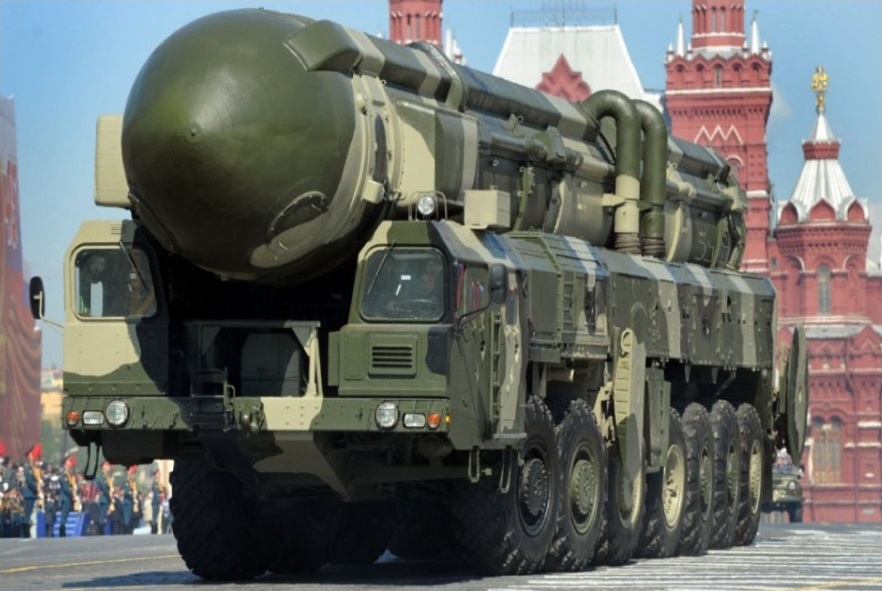
What brought about this new imbalance? We owe it to a substantial increase in lethality of U.S. nuclear-armed submarine-based missiles. This makes it possible that a U.S. strike might destroy most of Russia’s missiles, still largely land-based. This new situation is described by three weapons experts in the March 1 issue of the Bulletin of the Atomic Scientists.
The Bulletin’s authors characterize the new U.S. first-strike capability as “revolutionary.” The increase in U.S. ballistic missile lethality resulted from attachment to the warheads of an altitude-measuring device (called a superfuse) that ensures it will explode above a targeted missile, with 90 per cent probability of destroying it.
There are 506 submarine-based nuclear warheads, each equipped with super-fuses, routinely deployed at sea in U.S. submarines. (Each warhead yields 100 kilotonnes — eight times the Hiroshima bomb.) As a consequence, the full complement of 136 Russian silo-based ICBM’s might be destroyed by attacking each with two warheads.
This would leave the U.S. with a surplus of 234 super-fused warheads in their submarines, together with an additional 400 submarine-based “heavy” warheads (455 kilotonnes each) free to attack further targets, such as underground command centres, and forests sheltering mobile missiles. This catalogue of overkill does not include U.S. firepower on hundreds of land-based ICBM’s nor nuclear weapons on bombers.
American’s first strike capabilities are a legitimate threat to Russia, eliminating the desired balance between nuclear superpowers.