최종 업데이트: 2026년 4월 6일 | 5년+ 검증 경험 | 1,500+ 검증된 사이트 | 10만+ 사용자 신뢰
토토사이트 2026 - 검증된 안전한 베팅 플랫폼 완전 가이드
토토사이트를 찾고 계신가요? 2026년 현재, 온라인 베팅 시장은 급속히 성장하고 있으며, 수많은 토토사이트가 존재합니다. 그러나 그 중에서도 안전하고 검증된 사이트를 선택하는 것은 매우 중요합니다. 사기사이트, 먹튀사이트, 출금 지연等问题으로 인해 많은 이용자들이 피해를 보는 것이 현실입니다.
본 가이드는 2026년 최신 토토사이트 정보를 바탕으로, 검증된 안전한 메이저사이트를 엄선하여 소개하고, 사이트 선택 시 반드시 확인해야 할 보안 요소, 보너스 활용법, 입출금 과정 등을 상세히 설명드립니다.
Our generals say India’s spy agency RAW is up to its nasty tricks again. No evidence provided but, okay, we’ll buy the story for now. There are two good reasons. First, it’s safer not to question the wisdom of generals. Second, they speak from deep experience, having long played the spy-versus-spy game across borders.
So let’s provisionally assume that India’s spies have engineered the odd bomb blast here and there, and send occasional gifts to the BLF or other militant Baloch movements.
But RAW’s alleged antics are pinpricks compared to the massive and irreversible brain damage that Pakistan’s schools, colleges, and universities inflict upon their students.
Imagine that some devilish enemy has perfected a super weapon that destroys reasoning power and makes a population stupid. One measure, though not the only one, of judging the lethality of this hypothetical weapon would be lower math scores.
No such scores are actually available, but for over 40 years my colleagues and I have helplessly watched student math abilities shrivel.
Only the wealthy customers of elite private schools and universities, tethered as they are to standards of the external world, have escaped wholesale dumbing down. As for the ordinary 99pc, with the rare exception of super-bright students here or there, some form of mental polio is turning most into math duffers.
Imagine that an enemy has perfected a super weapon that destroys reasoning power.
Does being poor at math really matter? After all there are plenty of intelligent people everywhere, even brilliant ones, who hate math and therefore are bad at it. But this is only because they had dull and uninspiring teachers who never taught them that math is a beautiful exercise of reason, one step at a time. Once on track, you quickly realise that math is the most magnificent, surprising, and powerful of all human achievements.
The success of the human species over other forms of life on planet Earth depends squarely on mathematics. Without math the pyramids could not have been built, navigation would be impossible, electricity could not have been discovered and put to use, factories and industries would not exist, computers and space exploration would be unimaginable, etc.
Here’s how bad our situation is: in a recent math class, I had rather typical 18-20 year-olds from non-elite schools. They had studied geometry but their teachers had not exposed them to the notion of proof — the step-by-step process in which one starts with a proposition, carefully constructs arguments, and then triumphantly arrives at the conclusion.
Instead, they were taught math as a hodgepodge of recipes. A few they remembered, the rest were forgotten.
I nearly wept to see that barely three to four students out of 60 could prove the angles of a triangle add up to 180 degrees. None could prove that similar triangles have proportional sides. Quite a few had difficulty with fractions, some did not know how to take the square root of four or nine or unless armed with a calculator, and translating even simple real-life situations (like compound interest) into equations was difficult. Twelve-year-old kids in Japan or Europe would have done better.
Their teachers are still worse. Earlier I had the misfortune of teaching math courses to college math teachers. In their late 30s or early 40s, most were staid and stable family men who had come to university, expecting to get a higher degree and hence a higher pay grade.
But for all their years of teaching math, they were blanks. Diluting my nominally ‘advanced math’ course to a beginning level course did not help. My conscience could not allow a single teacher to pass.
Could the use of English — a difficult language for all except ‘O’ and ‘A’ level students — reasonably explain this dreadful situation? I am sympathetic to this point of view and therefore use Urdu exclusively in my physics and math lectures, both in distance learning modules and in real-time teaching (except when a university’s regulations require that I teach in English). But this barely solves 10-20pc of the problem.
So then is the math curriculum at fault? It certainly can be improved but almost the same topics in math and science are listed in Pakistani curricula as would expectedly be covered by a similar cohort internationally. In fact, primary school children in Pakistan are expected to carry a bigger burden than overseas kids.
The impediment to learning proper math is just one — wrong learning goals, wrong attitudes. Mathematics does not require labs, computers, or fancy gadgetry. But it does demand mental capacity and concentration. Nothing is true in math unless established by argumentation based upon a rigorous chain of logic, with each link firmly attached to the preceding one. The teacher who cannot correctly solve a math problem by following the defined logic will suffer loss of face before his students.
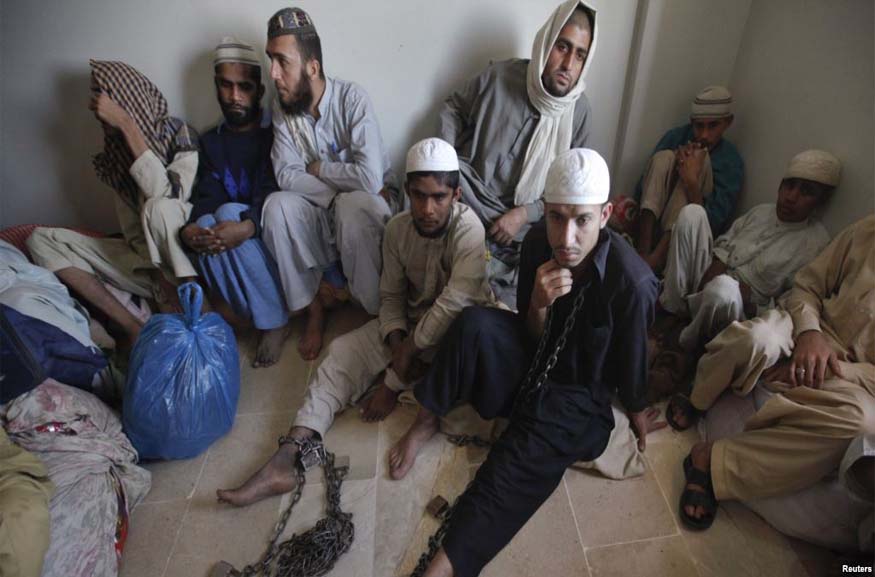
Contrast this with the madressah model wherein truth is defined by the teacher and prescribed books. The teacher’s job is to convey the book contents, and the student’s job is to appropriately absorb and memorise. There are no problems to be solved, nor is challenging suppositions or checking logical consistency either encouraged or even tolerated.
Limited to religious learning, such learning attitudes are perfectly fine. But their absorption into secular parts of the education system is disastrous. The hafiz-i-science or hafiz-i-math, which are copiously produced, carry exactly zero worth.
Giving logic a back seat has led to more than diminished math or science skills. The ordinary Pakistani person’s ability to reason out problems of daily life has also diminished. There is an increased national susceptibility to conspiracy theories, decreased ability to tell friend from foe, and more frequent resort to violence rather than argumentation. The quality of Pakistan’s television channels reflects today’s quality of thought.
For too long education reform advocates have been barking up the wrong tree. A bigger education budget, better pay for teachers, more schools and universities, or changing instructional languages will not improve learning outcomes. As long as teachers and students remain shackled to the madressah mindset, they will remain mentally stunted. The real challenge lies in figuring out how to set their minds free.