
The first part of this article, published last week, offered the reader a historical and geographical context to the Deccan region and the Bahmani state. It was an important prelude to narrating the tale of a pioneer of reforms and education – not only in the Deccan but in the whole of the Indian Subcontinent.
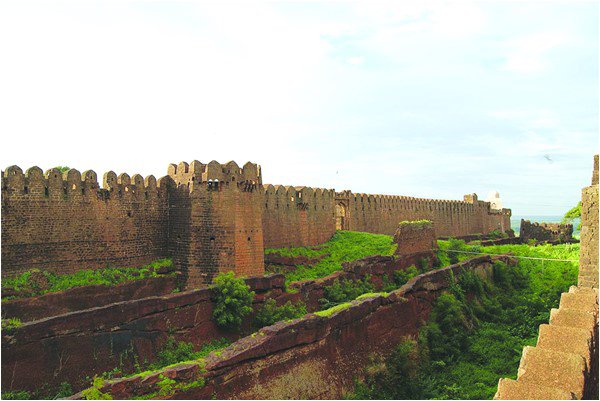
The story being told today is of a 15th-century trader from Gilan in modern-day Iran, who made his adopted home in the Bahmani Sultanate of the Deccan. He rose to serve as one of the most powerful and enlightened Prime Ministers in the entire history of the Subcontinent. He did pioneering work in land reforms, public administration and military reorganization, and established a large, well-staffed modern school at Bidar in modern Karnataka – the capital of the Bahmani state.
This medieval jewel was Khawaja Mahmud Gawan, who came to India from Iran.
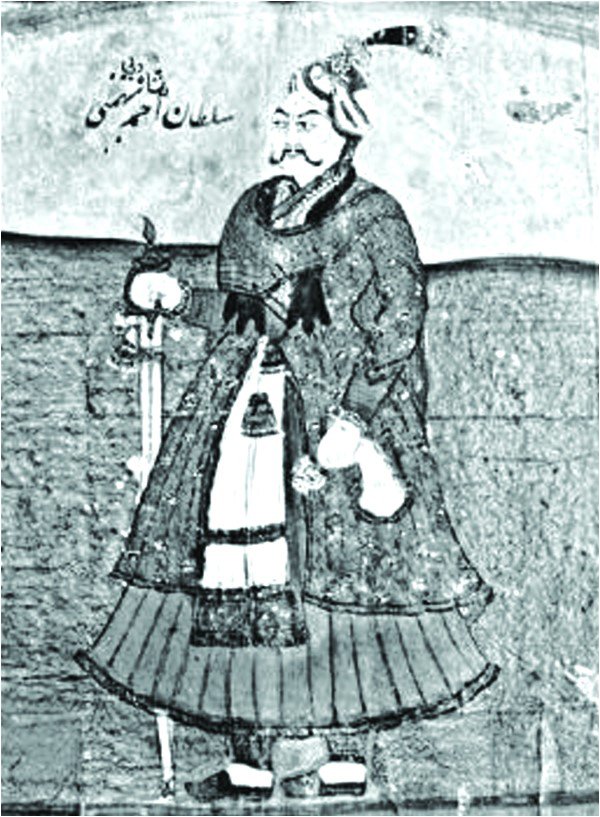
His life’s story has been recorded in Tarikh-e-Farishta. Mahmud himself compiled his 150 letters, written to friends and world leaders, as Riyadu’l Insha. Haroon Khan Sherwani has compiled his life from various sources and published it as Mahmud Gawan: The Great Bahmani Wazir. Afanasij Nikitin, a Russian traveller who visited Deccan in 1470, also mentions the glory of Mahmud in his travelogue. Besides these, the author has benefitted from the ample information available on the internet about Mahmud and his madrassah.
Gilan province is spread over the lands hugging the south west coast of the Caspian Sea. It lies within the greater Khorasan that produced a galaxy of luminaries in the Islamic Golden Age. Abdul Qadir Gilani, the 12th-century saint, much revered in the Indian Subcontinent, belonged to this region.
Mahmud was the first minister in medieval India to have ordered a systematic measurement of land, fixed the boundaries of villages and towns and assessed their revenue. He, in fact, anticipated the administrative reforms of Sher Shah Suri and Raja Todar Mal by a century.
By the mid-15th century, in the wake of highly destructive campaigns by the Mongols in the mid-13th century and Emir Timur in the late 14th century, Gilan, along with the rest of Transoxania, Persia, Iraq and Syria was devastated. The region lay divided into multiple, often hostile principalities.
In 1411, a boy named Imad-ud-Din Mahmud was born in a politically successful family of Qawan or Gawan in the Resht principality. Members of his family were, in his own words, “wazirs of kings”. Due to petty intrigues in Resht, Mahmud decided to migrate. His elder brother went to Makkah while he himself went to Cairo. He was offered courtly positions by rulers in Khorasan and Iraq but he declined due to the uncertain environment that prevailed in these regions.
He then decided to travel to India.
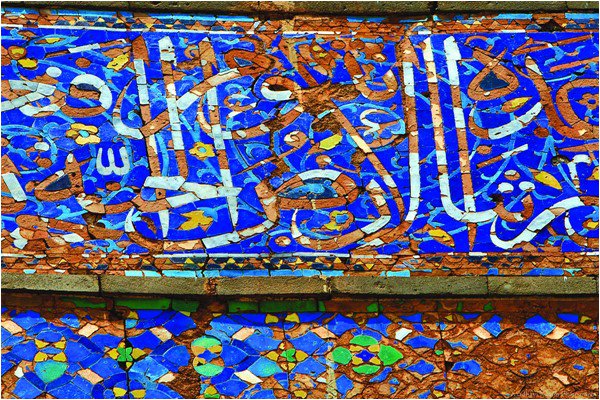
Mahmud arrived in 1453 at the important port of Dabol, now in Maharashtra. He then travelled to Bidar, where Alauddin Ahmad II was the ruler. He intended to travel later to Delhi. However, he was received with great consideration by the Bahmani sultan and decided to settle down at Bidar. Within four years, he was made a mansabdar (commander) of 1,000 men and charged with suppressing a rebellion headed by the ruler’s son and brother-in-law.
The next king, Humayun Shah, took the throne in 1458. He was called Zalim or unjust due to his cruel and capricious nature. He appointed Mahmud as his minister. We don’t know what other functions Mahmud was performing at the court but he had certainly gained the trust of the royal court.
Under the next two Sultans, Mahmud’s star rose rapidly. The ruler Muhammad Shah III (1463-82) ascended throne at the age of eleven and was jointly supervised by his mother the Queen Dowager and Mahmud for three years – before the former retired, leaving the entire administration of the state in the hands of Mahmud. This period was the pinnacle of his career. In 1566, he was elevated to Prime Minister in a formal ceremony. He was given authority over all the provinces. He was now called “Khawaja-e-Jahan, Malik-ut-Tujjar, Mahmud Gawan, Lord of the Habitants of the Globe, Secretary of the Royal Mansion, Asaf of the marks of Jem, Amir of Amirs, Deputy of the Realm”. He was allowed to have 1,000 Turkic-origin troops as his personal guard.
At this time, the relations of the Bahmani Sultanate were hostile with all its neighbours. The sagacious Mahmud signed a peace treaty with his northern neighbour the State of Malwa. The result was that as long as the Bahmani Sultanate lasted, i.e. until 1518, the peace between the two states held.
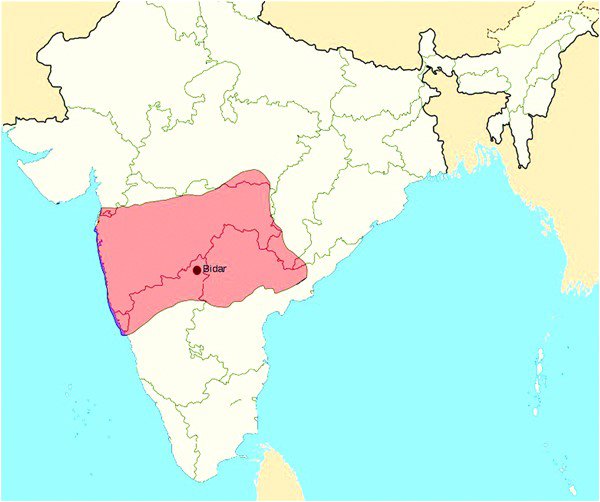
Now Mahmud turned to pacify the irksome coastal area along the Indian Ocean in the present-day province of Karnataka. The local rulers were indulging in sea piracy and looting of Hajj pilgrims. According to two letters written by Mahmud,
“The Raya of Sangameshwar alone sent nearly 130 vessels to rob the Mecca pilgrims annually” and that “many thousands of Muslims were sacrificed at the altar of the greed of these people.”
Commanding the Bahmani forces, Mahmud decided to end this lawlessness. He captured Bagalkot, Hubli, Sangameshwar, Bulwara, Miriad and Nagar forts. In 1472, he finally captured Goa, the main port city of Vijaynagar.
In his drunken state, the King ordered the execution of Mahmud.
It was a great campaign that won Mahmud great laurels. Tarikh-e-Farishta notes that Mahmud returned to Bidar with much in the way of spoils of war – and was received with great honour. Kettledrums were beaten for a whole week. The Queen Dowager called him her own brother. The King gave him further titles of “Lord of the Benign Council, Great Leader, Great Lord, Wielder of the Pen and the Sword”. The forts of Goa, Londa, and Kolhapur were added to his jurisdiction.
Farishta notes that when the Sultan departed, having honoured Mahmud, the later retired and praised the Almighty for all His kindness. He wept in humility, put on the robes of a dervish and distributed clothes, food, jewels etc. to the Syeds of Bidar.
During this time, Mahmud carried out a great many reforms in the fields of administration, military and revenue. He was the first minister in medieval India to have ordered a systematic measurement of land, fixed the boundaries of villages and towns and assessed their revenue. He, in fact, anticipated the administrative reforms of Sher Shah Suri and Raja Todar Mal by a century.