
This article is about two conflicting perceptions that exist in India and Pakistan about the division of the Indian Subcontinent in 1947 along religious-communal lines. The reader might perhaps wonder about the need for this discourse now after the passage of seven decades since the great divide – especially when issues of an urgent nature have overtaken this discussion.
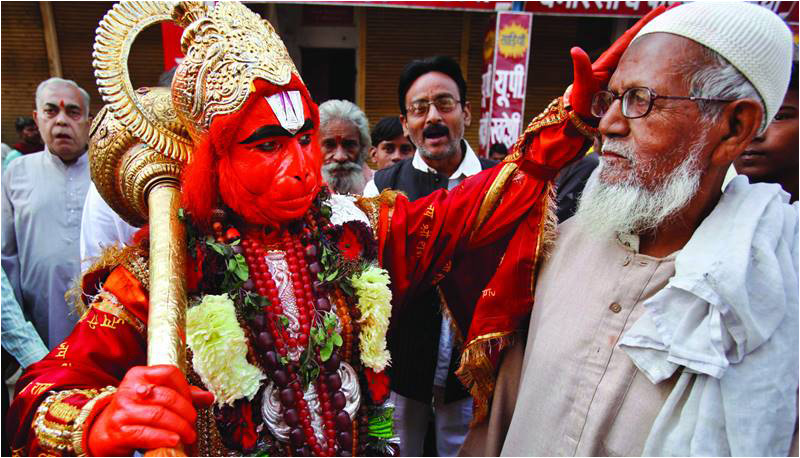
However, the most obvious dividend of this deliberation would be a realization that both communities, Hindus and Muslims, contributed to polluting the political environment as they adopted rigid attitudes, gave way to opprobrious passions and played – as they do to this day – into the hands of the extremists.
There are dire unresolved issues that plague the relations between two countries created in the midst of communal strife, and except for the Indus Water Treaty, they have not been able to resolve problems through bilateral discussion. At best, they remain in a state of fragile peace and often descend into war. The two nations belong to similar genetic and social stock but three generations have been born since independence. And, perhaps, in another three generations, the communal-ethnic distinctions would become even more pronounced.
For five months since February this year, the two countries shared the only international border in the world to be closed to all civilian aircraft. Quite a few times in the last three decades, they have unsheathed their nuclear arsenal. There are impetuous extremists on both sides who have shed their fear of a full-scale war and have launched or come close to limited local wars – Kargil, the Delhi Parliament building attack, Mumbai attacks, Pathankot attack, Balakot. Both sides appear willing to blink only when on the brink. The relations between the two are so volatile that one odd incident causes the projectiles to fly across the border. Their leaders have frequently placed their fingers on the nuclear button. This is a sad state of affairs.
Many Indians today believe that the bloodshed caused by Turkic raiders was with the purpose of annihilating the Hindu population. They overlook the fact that Mahmud of Ghazni and Emir Timur caused more bloodshed in Muslim lands west of the Koh-e-Sulaiman.
At the heart of this mutual hostility lie their crises of identity – as the two have adopted opposing understandings of the events that led to the division of British India. This does not augur well for the impoverished masses of the two nations. A better understanding of this divergence is essential to remove misunderstandings, bring the two nations closer, facilitate cross-border travel, improve trade and help preserve peace.
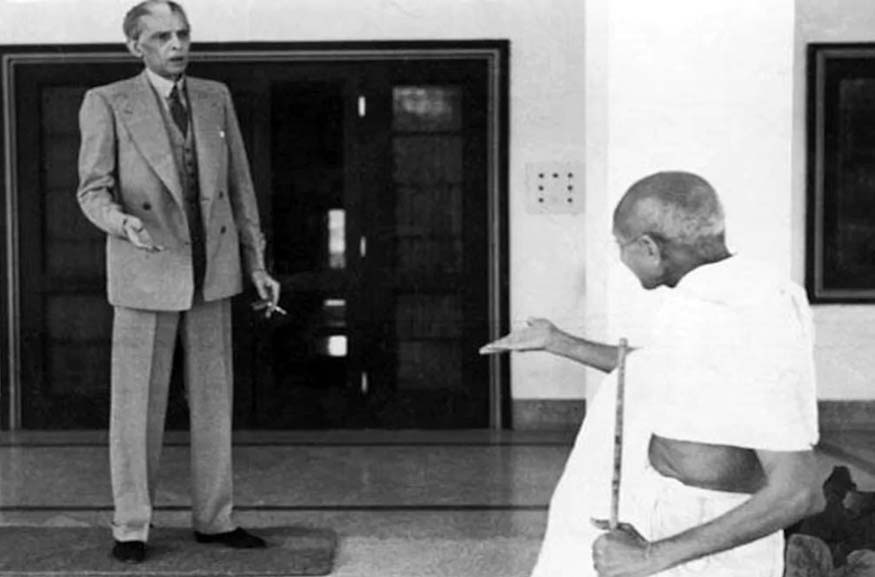
There are hundreds of books and much textbook literature on the historical Pakistan Movement, authored by persons more qualified than this writer. “Pakistan Studies” is a popular subject for higher studies in Pakistan and more PhDs are produced in this area than in the sciences and engineering. Unfortunately all research in this field is partisan, biased, based on preconceived ideas and directed towards predisposed results. There are very few objective books that take a critical view of the basis of freedom movement. Historians in India and Pakistan have recorded the events of the era through the filters of religion and party affiliation. While most Muslims in Pakistan and India hold the Quaid Muhammad Ali Jinnah, Liaquat Ali Khan and Allama Muhammad Iqbal above all human faults and political judgments, the Indian nationalists consider them bigoted communalists. Gandhi and Nehru, the two faces of a democratic, egalitarian and secular India, are considered saviours by post-1947 Indian Muslims. Ironically, both were considered anti-Pakistan by the Muslim League and “Muslim-appeasers” by supporters of the Rashtriya Swayamsevak Sangh (RSS) and the Bharatiya Janata Party (BJP), who continue to revile them. V. D. Savarkar, the leading founder of Hindutva philosophy, and his disciple K. B. Hedgewar, the founder of RSS, were on the periphery of popularity in pre-1947 India, but are now revered across India. Every niche in Indo-Pak history of the previous century offers a mutually irreconcilable view of political events.
With 70 years of hostility and a spate of violence between India and Pakistan, the original causes that led to the division of the Indian Subcontinent and their chronology have become hazy in the minds of the two nations. Events have been replaced with myths, thus losing objectivity. To educate our youth, there is a need for a historical view of the genesis of Pakistan – one that takes a dispassionate view of the deterioration of religious harmony in the first half of the 20th century.
There are two conflicting popular narratives in India and Pakistan respectively on the division of the Indian Subcontinent.
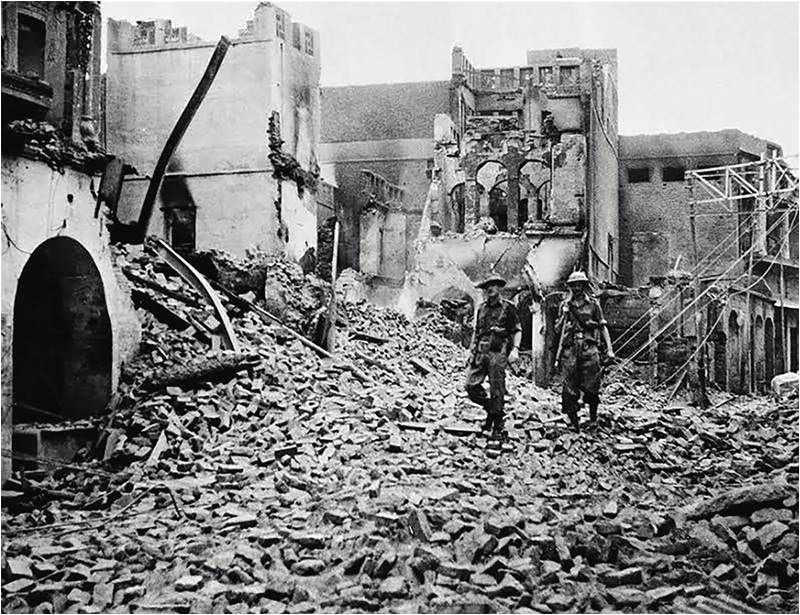
First the narrative adopted by the people in Pakistan, who generally believe that Muslims have lived in a watertight compartment in the Subcontinent, under duress from the majority community and always struggling to create a separate homeland. This narrative states that the Hindus and the British were in league to marginalize and persecute the Muslims, who were being systematically excluded from the national discourse to reduce their participation in economic and political activities. The Pakistan movement has been projected as an attempt to create a Fort of Islam, as an extension of Muslim-majority nations on its western borders. It subsequently became the desire of many in our country to lead an armed insurgency against “anti-Islam” forces all over the world for an Islamic revival and Muslim supremacy. There is also a widespread belief in Pakistan that the Muslims of the Subcontinent are a separate race; distinct and detached from the Hindus of this land, as if change of religion also altered their genetics. The students are told in their school textbooks that Pakistan was born when the first Muslim entered India. They are not taught that the followers of these two religions have lived in peace in the Subcontinent, though without social integration. Subsequently, both communities faced a common threat from Turkic marauders, who came to loot in the name of Islam from the 11th century onwards and spared neither the Muslims nor the Hindus in their plunder.
The secularists, moderates and nationalists were on the wrong side of history. In the end, the future of the Subcontinent continues to be shaped by the hardliners of two immense religious communities.
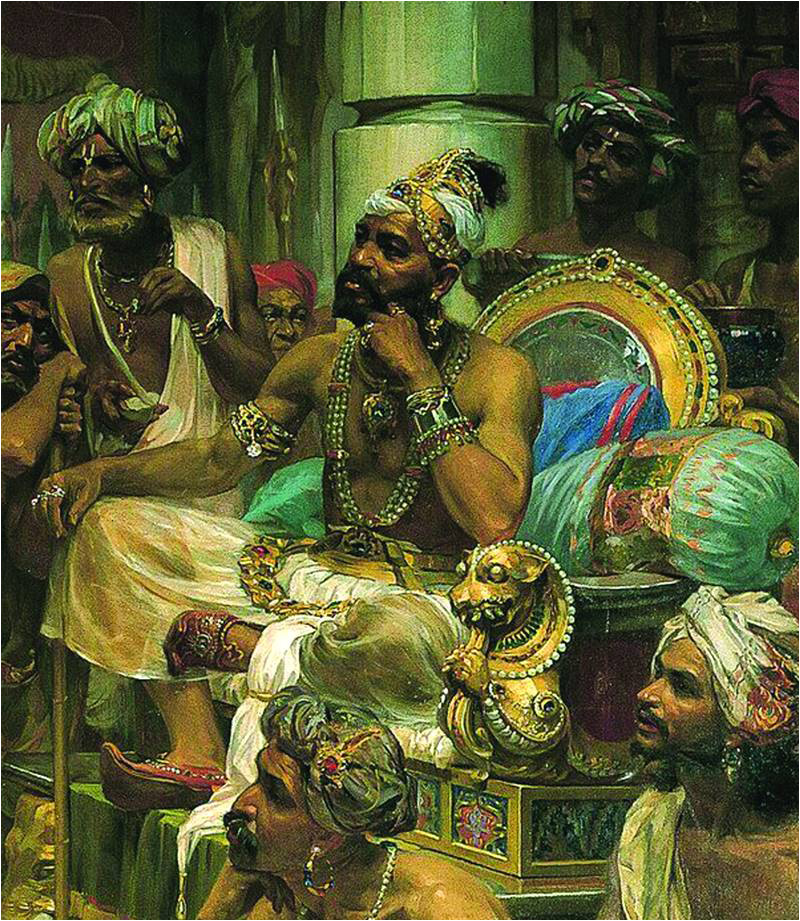
It is also not taught that Muslim merchants on the Malabar coast, believed to have first arrived during the lifetime of the Prophet Muhammad (PBUH), lived peacefully under the Hindu Zamorins for centuries. Nader Shah and Ahmed Shah Abdali ravaged Punjab with complete disregard for religious affinity. It was the Hindu Marathas who came to the rescue of nominal Mughal Emperor Shah Alam II when he was blinded by a fellow Muslim Ghulam Wadir Rohila. It is a matter of record that a Turko-Persian nobility ruled North India and the Deccan in conjunction with Hindu nobility and officials until the ascendency of the British. During that period, clashes between Hindu and Muslim states were as frequent and bloody as were those between Muslim states or between Hindu states themselves. Keeping these facts in mind, there is something amiss in the history of the Pakistan Movement as taught in the educational institutions.
Many Indian Hindus, on the other hand, widely hold the belief that Muslims living in the Subcontinent, or at least those living in Pakistan and northern India, are descendants – legitimate or otherwise – of raiders from the north. They believe that conversions of Indians were forced and under duress, and that local Muslims actively helped the Turkish raiders to decimate the Hindus. Even many of the Sikhs believe that all Muslim Jats of Punjab originally belonged to their faith and converted to Islam under duress during the reign of Aurangzeb. Many Indians today believe that the bloodshed caused by Turkic raiders was with the purpose of annihilating the Hindu population. They overlook the fact that Mahmud of Ghazni and Emir Timur caused more bloodshed in Muslim lands west of the Koh-e-Sulaiman than in the east.