
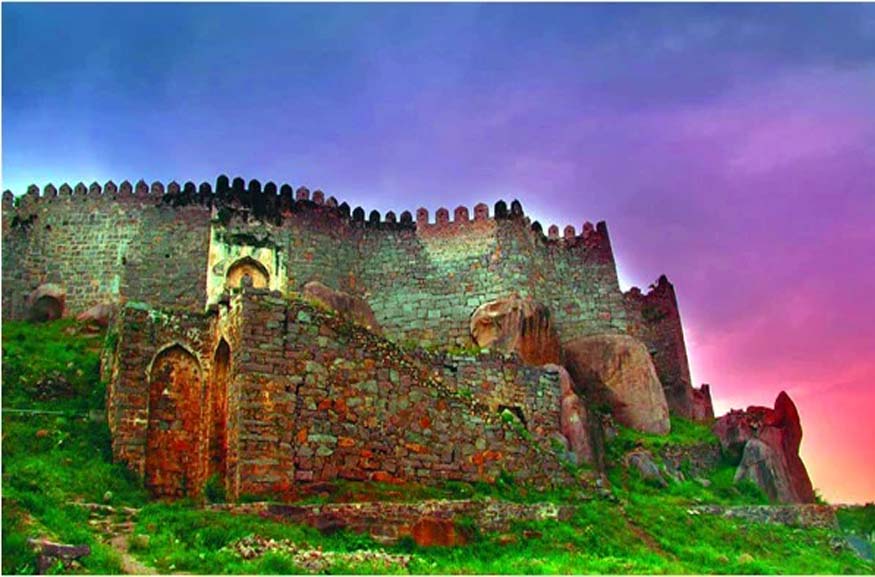
With his irreversible rupture with the Sultan of Golconda, Mir Jumla aligned himself with the Mughal court through the Prince who went on to become Emperor Aurangzeb – at that time, the viceroy of the Deccan. Together they planned and executed the siege of Golconda to have Mir Jumla’s family members released from imprisonment at the hands of Sultan Qutb-Shah and have his property restored. Aurangzeb besieged Golconda for two months, occupied the royal palaces, looted the tombs of the Qutb-Shahi dynasty for their precious stones and confiscated all the wealth that fell in his hands.
At this stage, the Mughal heir-apparent Prince Dara Shikoh feared that Aurangzeb’s victory would propel the latter into a stronger position to claim the succession to the imperial throne. He therefore forced his father, Emperor Shah Jahan, to order Aurangzeb to lift the siege and return to the Mughal southern capital of Aurangabad. The latter obeyed – but not before forcing the Qutb-Shahi ruler to give one of his daughters in marriage to the eldest son of Aurangzeb and also hand over a rich district in dowry to the prince.
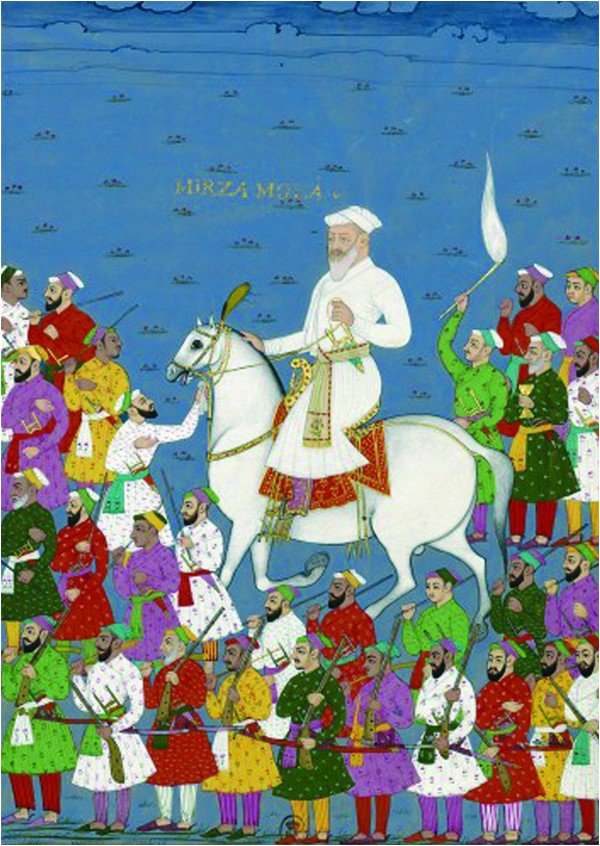
These were fateful times for the Indian Subcontinent in general and the Mughal dynasty in particular. Four sons of Emperor Shah Jahan, all from the same mother, were cognizant of the fast approaching destructive and fratricidal war of succession. Fearing that Saadullah Khan, the Prime Minister of the Mughal court, was against him, Prince Dara, according to Mannuci, had him poisoned to death.
Having heard of the bravery and administrative skills of Mir Jumla, and with the seat of the Prime Minister vacant, Shah Jahan invited him to Delhi. Mir Jumla arrived at the court with a lot of fanfare and was accorded much respect. All the nobles of the court were sent out to greet him and the streets along his route were decorated, as was done for the Emperor himself. Shah Jahan accorded him the title of Wazir-i-Azam. Being the Prime Minister, and soon to be appointed commander of Deccan campaign under viceroy Aurangzeb, Mir Jumla was now fully embroiled in Mughal court politics.
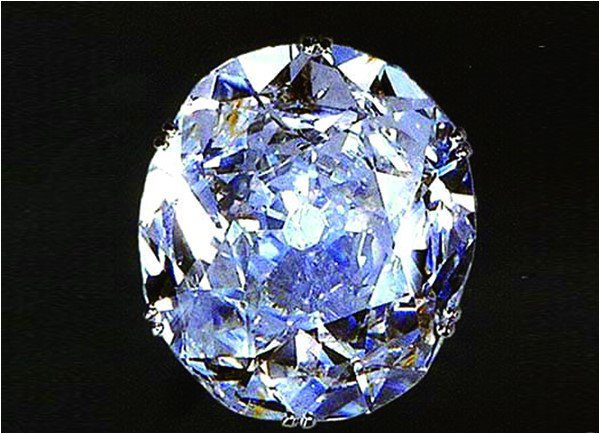
Mir Jumla told Shah Jahan that if Kandahar produced such gemstones as Koh-i-Noor, he would gladly undertake the campaign. He then produced a handful of diamonds of various sizes from Bijapur and Golconda
Control over the province of Kandahar had been contested between the Safavids of Iran and Mughals of India for long. It was surrendered to Shah Jahan in 1638 by the Kurdish turncoat Ali Mardan Khan, who was Safavid governor of the town. However, it had been recaptured by the Safavids during their war against the Mughals in 1649-53. Shah Jahan wanted Mir Jumla to organize an army and retake this lost province. The Mir, however, had other designs.
He presented Shah Jahan a large uncut clear diamond weighing 360 carats. It is believed to have been the Koh-i-Noor. He told Shah Jahan that if Kandahar produced such stones, he would gladly undertake the campaign. He then produced a handful of diamonds of various sizes, saying that they all came from the mines of Bijapur and Golconda, and offered to make Shah Jahan the lord of Coromandel – the lower eastern coast of peninsular India – and Karnataka. Infatuated by the promise of glittering diamonds, Shah Jahan acquiesced.
This diversion to the south marked the end of the Mughal desire to retake Kandahar – which, a century later, was to form the nucleus of the modern Afghan state. The Mughal military action in Bijapur gave rise to the Maratha insurgency and kindled the career of Shivaji, who became the embodiment of Maratha and Hindu assertion. The Marathas ultimately broke the back of Mughal empire. The diversion to the south kept Emperor Aurangzeb embroiled in an unending war that rendered the court bankrupt, led to the neglect of the North-West, giving rise to rebellion by the Pakhtuns, the loss of Kabul province and rise of Sikh militancy. India would never be the same. The life of Mir Jumla and his actions were thus truly monumental and had very far-reaching consequences indeed.
Dara was incensed at Mir Jumla’s southern campaign. He feared that such a large force under Mir Jumla might come to the aid of Aurangzeb in the contest for the throne. He also didn’t want the laurels of this victory to fall to the name of Aurangzeb. Accordingly, only three days before departure of the army, Dara bribed Mir Jumla’s European artillerymen, seducing them to leave service in the hope that this would result in failure of the campaign. He also ordered that Mir Jumla’s son should continue to stay at Delhi as deputy of his father – effectively, in fact, as a hostage.
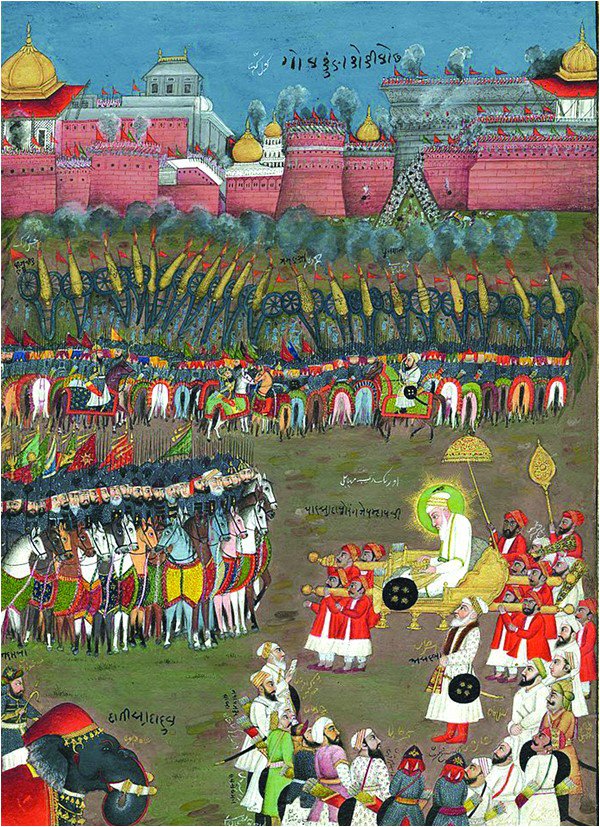
Mir Jumla marched south to annex Bijapur and Golconda, and to secure Karnataka for the Mughal crown. He captured the city and the fort of Bidar and together with Aurangzeb, defeated the Bijapur forces. When the Adil-Shahi state of Bijapur was on the verge of being annihilated, Shah Jahan fell sick and confined to bed. Dara as the nominated heir-apparent seized control of the affairs of the Empire. He immediately ordered termination of the Deccan military campaign, agreed to a peace deal with Bijapur, ordered Aurangzeb to retreat to Bidar and terminated Mir Jumla as the Wazir.
Facing a common adversary in the Crown Prince brought Aurangzeb and Mir Jumla close. Aurangzeb had already been complaining to the Mir about the hostility of his father, who he felt leaned unfairly in favour of Dara. Now on the eve of uncertain news from Delhi about the health of the Emperor, Mir Jumla advised Aurangzeb on every possible contingency. As Aurangzeb departed for Bidar and Mir Jumla departed to take over a Bijapur fort, they corresponded daily. In fact, Aurangzeb relied upon Mir Jumla till the latter’s death for all his affairs during the wars of succession and thereafter.
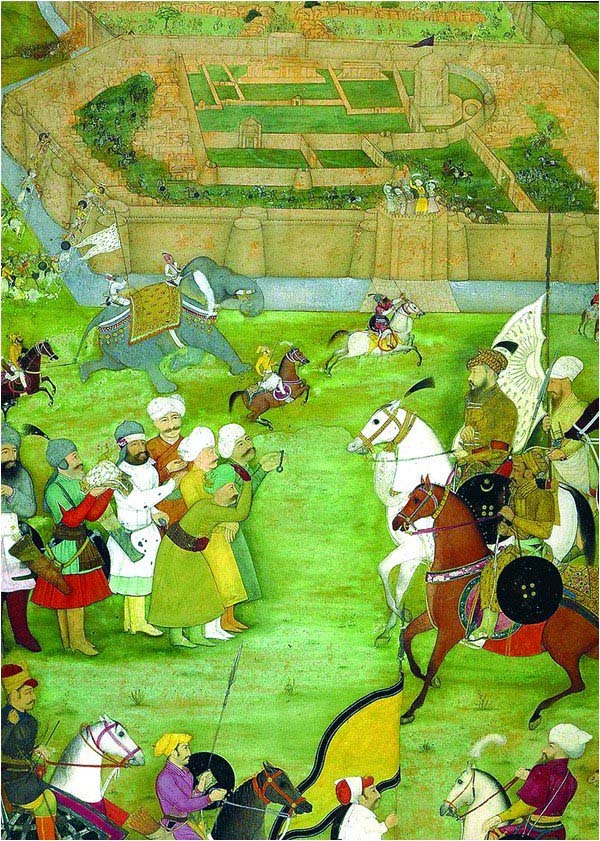
Having defeated his elder brother Dara in the field and then having had him strangled to death, and having had his other brother and ally, Murad, killed by treachery, Aurangzeb made Mir Jumla the Subedar of Bengal to take care of his last living brother Shuja. Mir Jumla chased Shuja to the farthest corner of Bengal over several skirmishes and drove him south across Chittagong to Arakan in Burma, where the unfortunate prince faced severe deprivations and died in unknown circumstances.
Aurangzeb was pleased with Mir Jumla over his services during these very trying sixteen months of contest and appointed him as the permanent Subedar of Bengal.
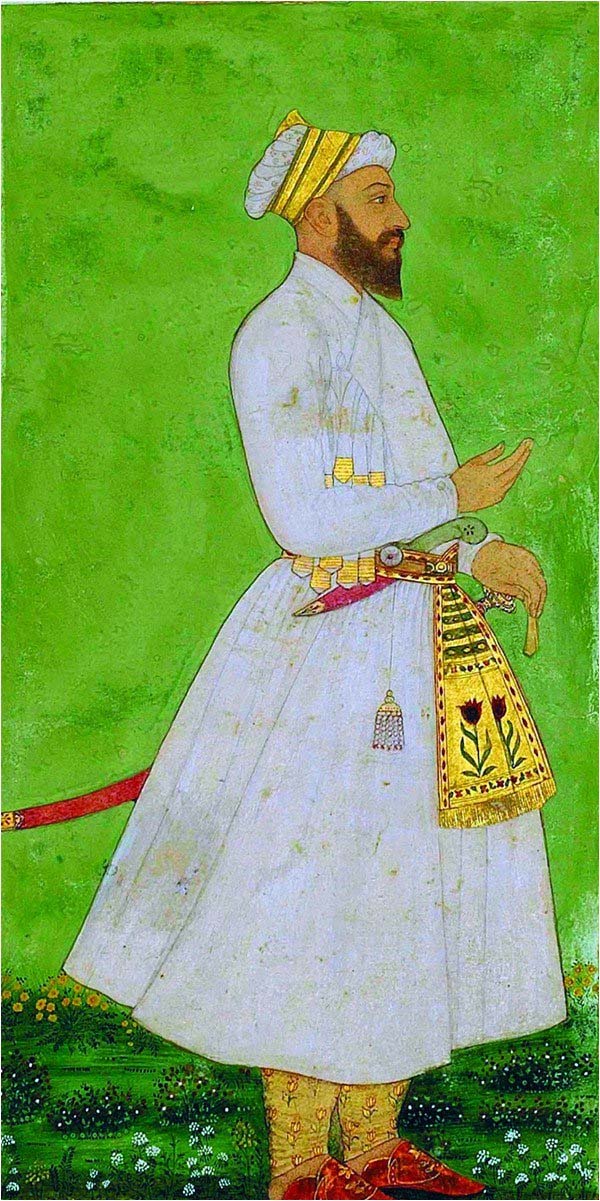
Mir Jumla brought order to Bengal. He constructed two roads, two bridges and a network of forts to secure the region. He also restored Dhaka as provincial capital.
Till this juncture in history, Bengal lacked sound administrative organization. The Europeans indulged in inhuman trading practices with impunity, including conducting a slave trade by kidnapping men, women and children from the coastal towns of these two states and selling them in the East Indies.
Mir Jumla brought order to Bengal. He constructed two roads, two bridges and a network of forts to secure the region. He also restored Dhaka as the capital of the province. He dismissed dishonest Qazis and replaced them with more honest judges.
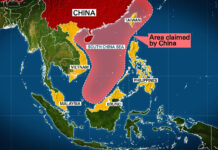
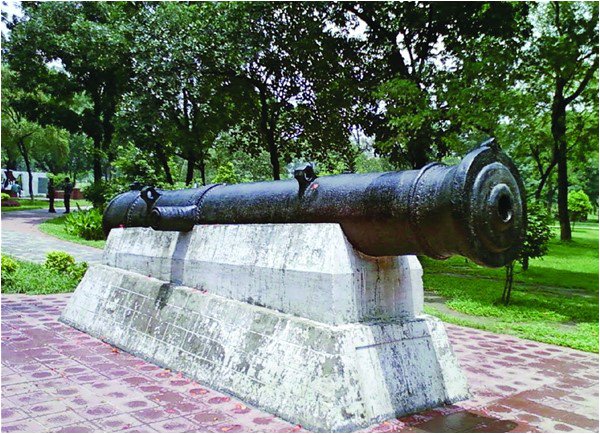
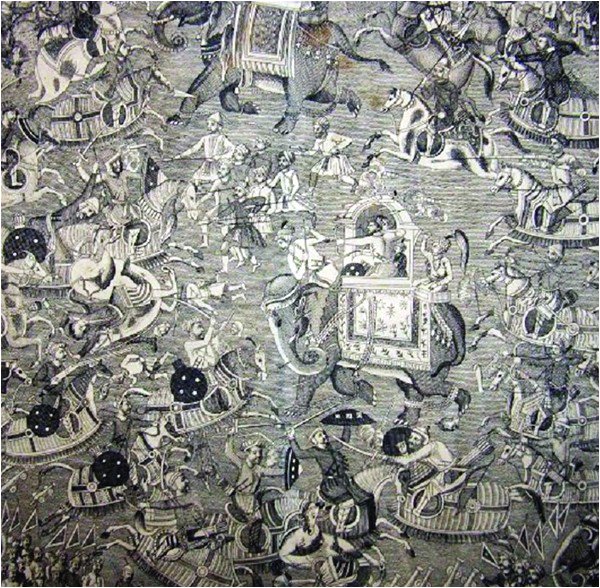
Mir Jumla then turned his attention to the unruly northern state of Koch Behar and north eastern Assam. According to Manucci, Mir Jumla wanted a route to China through Assam. He assembled a powerful army, in 1662, of 12,000 horse, 30,000 foot and a flotilla of at least 323 boats with guns that were manned by the Dutch, the Portuguese and the English. His troops included some Armenian horsemen and several Russian mounted infantry. Mir Jumla subdued Koch Behar and advanced upstream of the Brahmaputra to the Ahom territory in well fought battles. Several thousand indefatigable Ahoms were killed in a number of massacres to subdue these resolute tribesmen, who organised night attacks, stoppages of supplies and blockades of Mughal camps. Nothing could, however shake the resolve of Mir Jumla. He defeated the Ahom and applied severe terms for peace.