최종 업데이트: 2026년 4월 6일 | 5년+ 검증 경험 | 1,500+ 검증된 사이트 | 10만+ 사용자 신뢰
토토사이트 2026 - 검증된 안전한 베팅 플랫폼 완전 가이드
토토사이트를 찾고 계신가요? 2026년 현재, 온라인 베팅 시장은 급속히 성장하고 있으며, 수많은 토토사이트가 존재합니다. 그러나 그 중에서도 안전하고 검증된 사이트를 선택하는 것은 매우 중요합니다. 사기사이트, 먹튀사이트, 출금 지연等问题으로 인해 많은 이용자들이 피해를 보는 것이 현실입니다.
본 가이드는 2026년 최신 토토사이트 정보를 바탕으로, 검증된 안전한 메이저사이트를 엄선하여 소개하고, 사이트 선택 시 반드시 확인해야 할 보안 요소, 보너스 활용법, 입출금 과정 등을 상세히 설명드립니다.
Asizeable splinter within the military-led establishment is demanding that Imran Khan, as its former creation, deserves a second stint in power. Fractures have cascaded downwards and split the superior judiciary, bureaucracy, police and the general public.
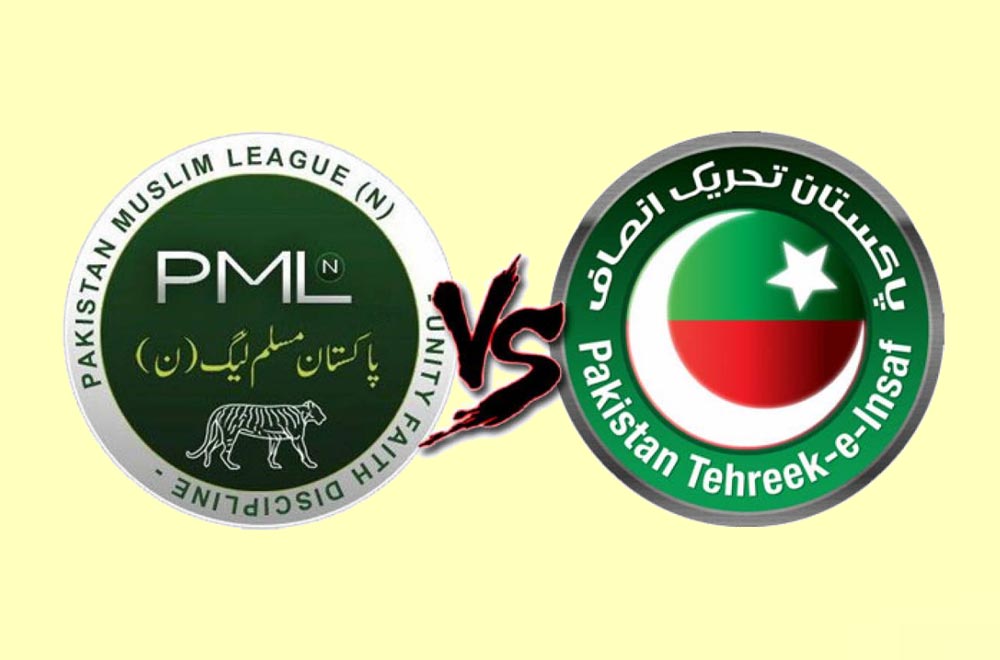
A hapless prime minister recently admitted that anarchy reigns. Punjab’s heavyweights — PTI and PML-N — are slugging it out on centre stage. Their mutual hatred has boiled over into abuse, abductions, assaults upon the police, petrol bombs and bullets.
To quote interior minister Rana Sanaullah, “Either he [Imran Khan] or us will get murdered. He has now taken the country’s politics to a point where only one of the two can remain.” Mr Sanaullah may not be a very savoury character and bears a grudge — probably justifiable — of being framed and jailed by Khan’s government for drug-dealing. Nevertheless, his conclusion appears sound.
To outsiders, these mutual antagonisms are puzzling. Bitter political fights occur everywhere — some are happening right now. In Israel, Benjamin Netanyahu might not survive the mass demonstrations challenging his manipulation of the judicial system. In France, hundreds of thousands protested violently after Emmanuel Macron increased the retirement age. But these protests are purposeful and will likely change their country for the better.
Pakistan cannot expect such positive change. Here, Imran Khan’s mass cult is pitted against the suspiciously rich Sharif family. Though both contenders for power are at daggers drawn, their common ethos and vision means the country’s future trajectory will not depend upon who wins or loses. In fact, all Pakistani leaders — whether civil or military — have shared a similar Weltanschauung. Governance practices during their stints in power scarcely differed.
The similarity of PTI, PML-N ideologies means their power struggle won’t alter Pakistan’s future path.
When seen on a large enough canvas, the evidence is overwhelming.
First: all parties — the PTI, PML-N, PPP, and JUI-F — have postures and positions on India and Kashmir that are indistinguishable. From Pakistan’s birth onward, patriotism and nationalism was conflated with anti-Indianism. This became a substitute for nation-building or working towards high positive goals. Hence, loving Pakistan means hating India; liberating Kashmir is the topmost priority; nuclear weapons are our most precious national assets; and an oversized army must be provided with every resource else we shall be swallowed up by India.
These assumptions, transmitted through schoolbooks, remain uncontested today. All national leaders helped to strengthen them further. Exceptions are Pervez Musharraf and Nawaz Sharif who, in their rare rational moments, realised that blind anti-Indianism was a dead-end.
Post-Kargil, Musharraf argued for a softer LoC, while Nawaz Sharif questioned the value of cross-border jihad. Thereafter, ‘Dawn leaks’ was played up by the establishment and paved the way to his removal as PM.
Hidden from public view by design is that three (1947, 1965, 1999) of the four Pak-India wars were actually initiated by Pakistan. Generous military and economic aid provided by the US made possible these wars of choice. But after that patronage disappeared, China shied away from stepping into America’s shoes. Talk of a forever war with India dissipated.
Also gone is the earlier option of pursuing war by covert means. FATF pressure led to Hafiz Saeed’s downfall, after which a flourishing cross-border jihad withered away. Today, the most any political party can do is to make noises and rhetorical gestures. Still, old habits die hard. Each hopes to score points by accusing its rival of being soft on Kashmir.
Second: both PTI and PML-N value religion as an instrument for social control and creating a passive mindset. This softens popular resistance to massive wealth inequities. During Pakistan’s early years, Muslim League leaders had exploited this passivity to block land reform in Punjab and Sindh. This holds true today too.
Although back-breaking inflation is devastating the lower classes and suicides are reported almost daily, there are no protest rallies as, for example, in Sri Lanka. But in the blink of an eye, the masses can be mobilised on any Islamophobia or blasphemy matter.
Although the PML-N accuses Imran Khan of playing the religion card, in fact it, too, does the same. Case in point: through the Single National Curriculum, IK sought to yoke madressahs and regular schools into a single hybrid system. The PDM government has accelerated its implementation.
To the dismay of teachers and students, schools in Punjab and KP have dropped art and computer classes to accommodate rote-learning of additional SNC religious materials. Pakistan’s rotten schooling — the lowest in quality anywhere — is poised to get even more rotten.
Third: PTI and PML-N are equally unworried about happenings on the ‘periphery’; for them Pakistan is Punjab. But outside Punjab, people look with bemused detachment at the media hoo-ha after the kidnapping of PTI party workers.
Why, they ask, was there radio silence when thousands went missing over the years in Balochistan, KP and Sindh. The jailing of PTM parliamentarian Ali Wazir, the arrest of Maulana Hidayat-ur-Rahman, the brutal murder of coal miners in Machh by religiously inspired militants, and countless terror incidents in Peshawar and Fata drew barely a flicker of concern in Punjab.
Fourth: No political party has any credible plan to rescue the economy. Now that all roads are blocked, to formulate one is impossible. This did not happen suddenly. Those at the top were forewarned years earlier of impending collapse but chose to look the other way.
The world, they argued, would never allow a country as big — and as nuclear — as Pakistan to fail. But with Pakistan’s steep fall in geopolitical importance after the US exit from Afghanistan, this false hope shrivelled. Should the Saudi-Iranian rapprochement take off, a further downgrade will follow.
Overspending on defence, overpopulation, overconsumption of luxury products, underproduction of industrial goods, undersupply of useful human capital, and a singular focus on real estate investments will exact their terrible toll in the months to come.
As the rupee sinks, to imagine that friendly countries will forever keep bailing out Pakistan — or that expats will resuscitate a bankrupt economy — is childish nonsense.
Let’s face it: a flawed concept of nationalism created a class of plunderers, both civilian and military. The chickens have come home to roost. The flour stampedes are just the beginning. The poor will pay first, but all will pay ultimately.