최종 업데이트: 2026년 4월 6일 | 5년+ 검증 경험 | 1,500+ 검증된 사이트 | 10만+ 사용자 신뢰
토토사이트 2026 - 검증된 안전한 베팅 플랫폼 완전 가이드
토토사이트를 찾고 계신가요? 2026년 현재, 온라인 베팅 시장은 급속히 성장하고 있으며, 수많은 토토사이트가 존재합니다. 그러나 그 중에서도 안전하고 검증된 사이트를 선택하는 것은 매우 중요합니다. 사기사이트, 먹튀사이트, 출금 지연等问题으로 인해 많은 이용자들이 피해를 보는 것이 현실입니다.
본 가이드는 2026년 최신 토토사이트 정보를 바탕으로, 검증된 안전한 메이저사이트를 엄선하여 소개하고, 사이트 선택 시 반드시 확인해야 할 보안 요소, 보너스 활용법, 입출금 과정 등을 상세히 설명드립니다.
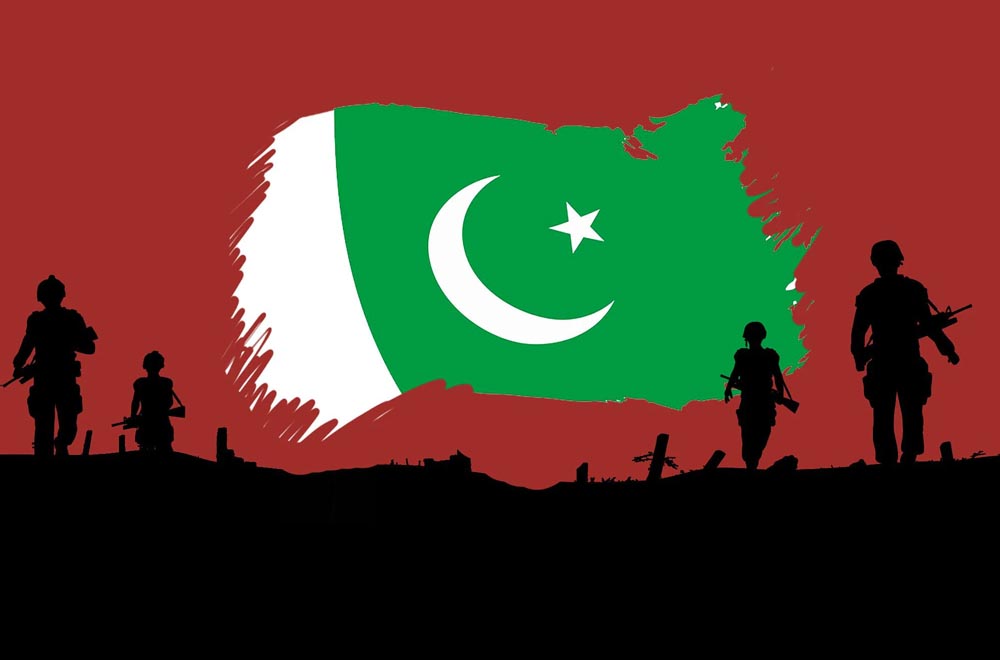
As the Pakistani Taliban (TTP) ramp up their murderous attacks on Pakistani soldiers, ISI officers, police, and ordinary citizens, the men who run Pakistan’s security establishment are trotting out the usual bluff and bluster.
A 600,000-strong army with nuclear weapons and advanced American-Chinese weaponry should suffice for securing Pakistan’s borders. Moreover, with its tough professionalism and experience in non-conventional warfare, it could have conclusively defeated a ragtag terrorist militia. This has not happened.
On the contrary, serious missteps, both strategic and tactical, have strengthened the enemy.
To help lift the Afghan Taliban into power was a massive strategic miscalculation. For years, our security managers used state propaganda machinery to assure us that the Afghan and Pakistani Taliban are somehow different. That delusion stands fully exposed.
Now, freshly victorious against a superpower, Kabul’s new rulers openly taunt Pakistan, dismissing possible Pakistani air or land incursions against TTP sanctuaries inside Afghanistan. Pakistan has created for itself yet another hostile neighbour and another nightmare.
Tactical blunders are also making Pakistanis increasingly anxious. TTP’s top guns like Muslim Khan and, earlier, Ehsanullah Ehsan, were secretly released. Why? Ready willingness to negotiate with terrorists and giving into their demands has greatly emboldened them.
TTP flatly refuses to disarm or respect Pakistan’s Constitution. Instead, it is making additional demands that no sovereign state can possibly accept.
Our security managers, however, steadfastly refuse to negotiate with PTM’s staunchly anti-TTP leaders. Although PTM has never called for taking up arms against Islamabad, their leaders are harassed and Pakhtun parliamentarian Ali Wazir remains jailed.
More puzzling: military authorities in Swat punished citizens protesting the firing upon a school van by TTP militants. That the army lost hundreds of valiant soldiers in 2006-2009 while fighting Maulana Fazlullah’s minions seems forgotten.
The mother of all questions is never asked – why should Pakistan fight the TTP?
This strange, erratic and bizarre behaviour owes to an ideological vacuum which is creating space for various unhealthy speculations. With Kabul clearly supporting TTP, is the pre-2021 good-Taliban, bad-Taliban philosophy still intact?
The Americans are gone and India has been driven out of Afghanistan, so who now is friend or foe? Are orders from the top being followed by those below? Will Nacta continue to be mere window-dressing? Are officers and soldiers on the same page? Are political leaders at all relevant?
Such questions far outnumber answers. But, to my knowledge, the mother of all questions has never been raised by any national leader, general, or even by political analysts writing newspaper op-eds. It is assumed to be just too sensitive. That question cannot be simpler: why should Pakistan fight the TTP?
Of course, everyone agrees that TTP’s savagery is wrong. But, quite arguably, all conflicts are brutal. This ‘obvious’ answer is unsatisfactory because it simply skirts the core issue. Logically, if its goals are good ones, then to fight against TTP is unnecessary.
Let’s see what TTP wants: first, it seeks to delegitimize Pakistan’s claim on an area bordering Afghanistan. More precisely, this means changing Fata’s status back to semi-governed. Removal of border fencing is fully supported by the Afghan Taliban as well. This demand is not unreasonable. Imperial powers of the last century had indeed created an enduring mess.
The border problem dates to 129 years ago, when a middle-aged Englishman, Mortimer Durand, was tasked with creating a map delineating Russian and British areas of influence. This lazy, whisky-sipping official, armed with ruler and pencil, drew a ruled straight line across the map, splitting the Pakhtun population on either side.
How to solve a problem of his creation? The only eventual solution — though presently unlikely — is through creating goodwill, renunciation of force, and softening borders. An unnatural, century-old division should not mar the Pakistan-Afghanistan relationship in perpetuity.
TTP’s second demand is far more intractable. As a starter, it wants to impose Afghan-style Sharia in Fata before extending the system across Pakistan. This means terminating female education, justice via limb-chopping, installing a shura system headed by an amirul momineen in place of democracy, and cutting Pakistan off from the modern world.
For non-Muslims, Shias, (Sunni) Barelvis and modern-minded Muslims, this is grotesque.
On the other hand, radicalised sections of urban Pakistani society, as well as backward areas, welcome this version of Sharia. Pakistan’s security managers are well aware of this. After 2002, heavy losses were incurred by the army when it established military bases in South Waziristan. This area had become a refuge for Taliban and Al Qaeda fleeing Afghanistan after 9/11. Fighting soon spread to North Waziristan.
The senior army leadership, safely removed from combat areas, officially ascribed the resistance to “a few hundred foreign militants and terrorists”. But the morale of ordinary sepoys continued to sink. They wondered why they were being asked to attack their ideological comrades — the Taliban and other Islamic groups. Defections and surrenders were reported.
From the Urdu press, one learnt that local clerics in Waziristan and Swat in those days refused to conduct funeral prayers for soldiers killed in action. An audacious 2012 attack on Bannu jail released 384 terrorists, with prison guards standing aside and raising slogans in support of the Taliban attackers and imposition of Sharia.
It is time that our generals and political leaders tell us clearly why the TTP should be destroyed. From the history of warfare, we know weapons alone cannot win a war; motivation is crucial. The military’s India-centric cadet and defence colleges are echo chambers that do not prepare officers mentally for combating a still deadlier enemy.
Compare: by official counts, there were 70,000 deaths from terrorism in 2002-2014, whereas Pakistanis killed in all four Pakistan-India wars add up to around 18,000.
If Pakistan is to eventually defeat TTP and its backers in Kabul, our soldiers must know what they are fighting for and why. An ideologically confused army cannot hope to fight and win. Without a clearly spelt-out cause, there cannot be strong motivation. Else Pakistan will lose and TTP will triumph.