In the foreword to Life of Mir Jumla by J.N. Sarkar, the famed historian writes:
“Mahmud Gawan, Malik Ambar and Mir Jumla were the three gifts of Persia to India.”
Beloglonging to vastly variant backgrounds, these three arrived in the medieval Deccan under differing circumstances. However, they all had been educated in the centres of the Islamic Golden Age and had imbibed the illuminating Khurasani spirit. All three followed highly glittering careers in the new land and, in return, enriched their adopted society through vibrant contributions.
I wrote the story of Malik Ambar titled “How an Abyssinian Slave came to rule the Deccan” that appeared in the 20th April 2018 issue of The Friday Times. The story of Mir Muhammad Said Ardistani, commonly known as Mir Jumla, a general and governor of Emperor Aurangzeb, will be told at a later date. This current story is about Malik Mahmud Gawan, who was the earliest of these three to arrive in Deccan in the Bahmani Sultanate. That Kingdom, the first independent state of its kind in the Deccan, extended from the Krishna River in the south to the Vindhya Range in the North. Before his story is narrated, in part II of this series, a brief geographical and socio-political survey of the region will be undertaken to put his tale in perspective.
The Deccan was not breeding any horses locally – and yet using them extensively for warfare. The horses imported from the Persian Gulf ports would fetch a tenfold profit to the merchants.
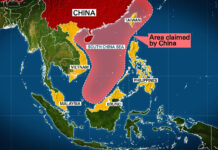
First, a bit of geography will help in understanding the salient features of the Deccan. There are two great watersheds in the South Asian Subcontinent, as observed in different river systems. The great hump running from Himachal Pradesh in the north through the Thar desert to the Gulf of Kutch in the south separates the Indus Plain, mainly Pakistan, from the Gangetic Plain, i.e. North India. The second great watershed is the collection of hill ranges, namely the Vindhya and Satpura in Madhya Pradesh and Chattisgarh that merge with the Chotanagpur Plateau, covering parts of West Bengal, Odisha, Jharkand and Bihar. The waters north of this low hill system drain in to the Yamuna and the Ganges whereas those in their south flow either into Arabian Sea or the Bay of Bengal.
South of the Vindhya, there is a pair of parallel rivers that flow from east to west and fall into the Arabian Sea at the Gulf of Khambhat. The northern of these rivers is the Narmada that flows in the depression between the Vindhya and Satpura ranges whereas the other, the Tapti River, flows south of Satpura Hills. Two smaller rivers a little to the north, the Sabramati and the Mahi, also fall in the Gulf of Khambhat. The rivers further south, including Mahanadi, Godavari, Krishna, Cauvery and Vaigai, flow from the higher Western Ghats to the lower Eastern Ghats before draining into the Bay Bengal.
South of the Himalayas and the Karakoram ranges, the Indo-Gangetic plains and the Deccan plateau do not receive snowfall, except for some sleet at some high places. The rainfall in the Deccan is in the four monsoon moths. The area is dry – with some areas bone-dry – for the rest of the year. The rivers that are mighty in the rainy season turn to trickles in the dry season. That is one of the reasons that despite the efforts of the Union government of India and frequent rulings by the Supreme Court, the issue of water sharing from the Cauvery River remains unresolved. In fact, if Karnataka and Tamil Nadu had been independent nations instead of being states of one country, they might even have gone to war on the issue of sharing Cauvery waters!
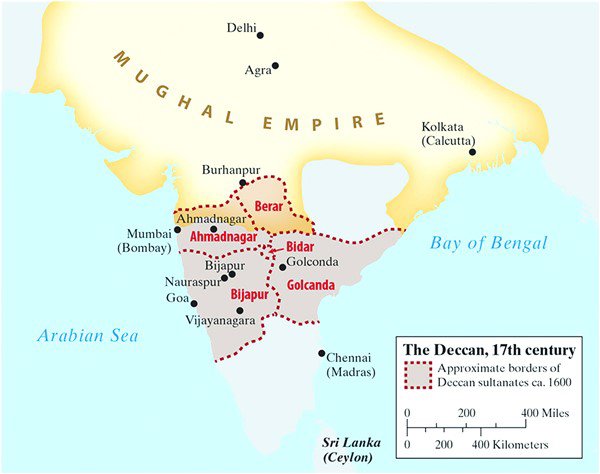
The traditional northern boundary of the Deccan – literally meaning ‘south’ – is the southern face of the Vindhya Hill Range. Although peninsular India is generally referred to as the Deccan, the word specifically relates to the lands lying between the Narmada in the north and the Krishna in the south. In ancient times the Vindhya hills were also called the southern boundary of Aryavarta,meaning the territory of Aryan people who had irrupted from Transoxania and crossing the Hindukush Mountains, had occupied the Indo-Gangetic plains. In the process, they had either annihilated or pushed south the original inhabitants of India. These original Indians, who had developed the Indus Valley culture, the first known civilizations in the Subcontinent, were the Dravidians, who are now the majority ethnic stock in the states of Deccan. Their smaller remnant is found in the Dravidian Brahui-speaking people living in the central Baluchistan.
There are scant local Deccani accounts of the socio-political conditions of the area in medieval times. According to Sir Henry Yule, historian and translator,
“Extraordinary darkness hangs over the chronology of the South Indian kingdoms”
However, there were some foreign adventurers who have written about their travels in the region. The first of these was Marco Polo who stayed in the southern Tamil Nadu region in 1292-93 on his return voyage from China to Venice. The next travelogue is of Ibn Batuta who travelled through South Eastern India on his journey from Delhi to China via Ceylon in the late 1330s. Afanasij Nikitin from Russia travelled through the south extensively in 1470 and wrote about his experiences. Then there was Farishta who spent considerable time at the turn of 16th and 17th centuries and wrote a 12-part history of India.
This article has relied on all of these historians. Some other Muslim historians and geographers of Islamic Golden Age such as Idrisi, Rashiduddin, Abulfeda, Wassaf etc also wrote extensively about the area.
The Deccan had been physically and socially separated from the North since the demise of the Mauryan Empire in the 2nd century BC. Its social development had been independent of North India, as testified by accounts of Marco Polo and Nikitin, who visited the Deccan before the arrival in the Indian Ocean of Vasco de Gama and other Europeans with armed trading fleets. Both the writers, as also Ibn Batuta, observed a healthy trade in indigo, lac, pepper, ginger and cotton. They saw a large number of Arab merchants, many of them permanently stationed on the coastal cities. There were also Chinese traders visiting these port cities. The Indian cultural influence in South East Asia can be traced back to trade with South India.
Another interesting observation of these travellers was that the Deccan was not breeding any horses locally – and yet using them extensively for warfare. The horses imported from the Persian Gulf ports would fetch a tenfold profit to the merchants. However, the Deccan people were not aware of techniques to maintain horses. For one, there were no farriers – the specialists in equine hoof care – in the entire Deccan. The locals didn’t use horse shoes and, probably, the Arab merchants never taught them how to. Marco Polo wrote,
“Another strange thing is that they feed their horses with boiled rice and meat, and various other kinds of cooked food. That is the reason why all the horses die off.”
The result was that the horses would wear off rapidly, requiring a steady supply and creating an incentive for maintaining a healthy trade.
Marco Polo and Nikitin both observed that people went about “naked”. Marco Polo wrote,
“You must know that in all this Province of Maabar there is never a tailor to cut a coat or stitch it, seeing that everybody goes naked! For decency only do they wear a scrap of cloth; and so ‘tis with men and women, with rich and poor, aye, and with the King himself.”
Nikitin, too, made numerous similar observations. Arriving from Muscat on a ship he notes,
“And here is the Indian country. The people all go about naked, their heads are uncovered and their breasts are bare; and their hair is twisted in a single braid; and the women go about big-bellied and bear children every year, and they have many children, and the men and women are all black.”