
Historian Jadunath Sarkar notes in his foreword to Life of Mir Jumla that Persia has given three noble gifts to India. He was referring to three persons who migrated from Persia to the Deccan and were very able administrators and military commanders. I have written in this space about two of these ‘gifts’ namely Khawaja Gawan of the Bahmani Kingdom and Malik Ambar of the Ahmadnagar State. This article is about the third, Muhammad Said, more commonly known as Mir Jumla.
Mir Jumla was the title of the Prime Minister of the 17th century Qutbi-Shahi Sultanate of Golconda. As is explained below, Muhammad Said became Mir Jumla of the Sultanate by virtue of his proven administrative and military skills. The title stuck and that is how posterity knows him now.
Mir Jumla’s rise in international trade coincided with the decline of the Portuguese in India and the rise of the British and Dutch naval powers.
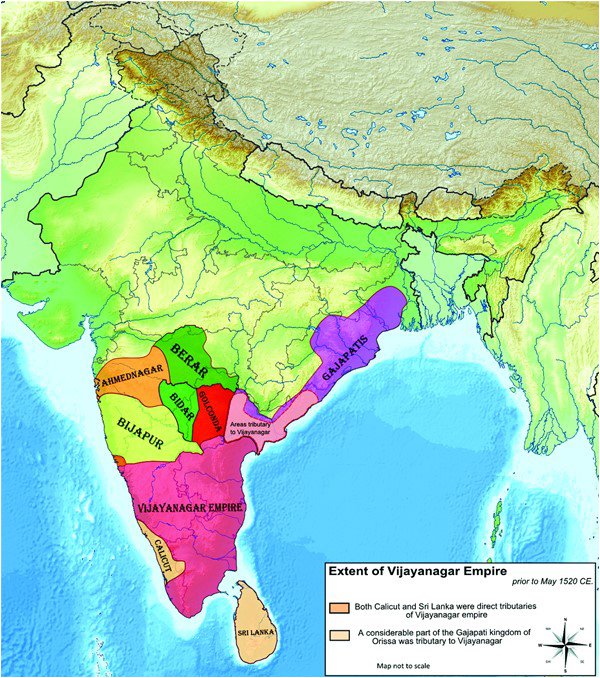
Later, while serving the Mughals, he was promoted by Emperor Aurangzeb to Diwan-i-Kul – Minister of Everything – of the Empire. He thus earned the rare honour of gaining the highest administrative posts in two different realms, one of which supplanted the other! For his part, Mir Jumla extended the Mughal domains in the Deccan up to Karnataka in the south and to Cooch Behar and Assam in the North East. In the process, he annihilated the weakened Vijayanagar Empire and subdued the fiercely independent Assamese.
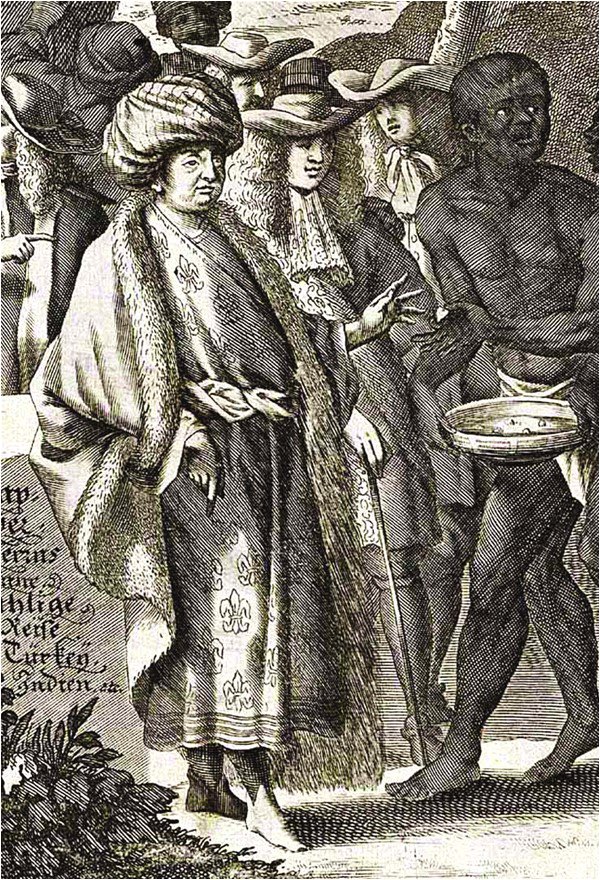
Luckily, his life history is well documented. Many Persian historians of the Deccan wrote about his career. The French merchant J.B. Tavernier, who came in contact with him in the Deccan and the imperial capital of Delhi, and Italian adventurer Niccolao Manucci, have left detailed notes on his career and wealth. Then during his conquest of Cooch Behar and Assam in 1660-63, he employed a historian Shihab-ud-din Talish, who wrote a detailed diary about his master and also an appraisal of the land and people of these two regions. Finally, Jagadish Narayan Sarkar used extensive sources in writing The Life of Mir Jumla for his PhD thesis in 1951. This article has mainly consulted and quoted Manucci and Sarkar.
By the seventeenth century, the springs of scholarship in Iran and Central Asia had, relatively, dried up. Very few remnants of its extensive great civilization had survived. The social and political structures in the region had been dismantled first by the Mongols and then by Emir Timur. The Safavid rule had imposed tyranny of another kind. In this environment of political and social uncertainty, many scholars and military men were forced to leave Persia and migrate to Mughal India or the Deccan Sultanates. With prosperous Mughal rule in the Indo-Gangetic plains and five stable – though mutually hostile – Shia states in the Deccan, the Indian Subcontinent offered prospects for a prosperous future to the adventurous Muslims of Iran and Central Asia. Muhammad Said, Mir Jumla, was one such Persian luminary who migrated to the Deccan in search of economic security.
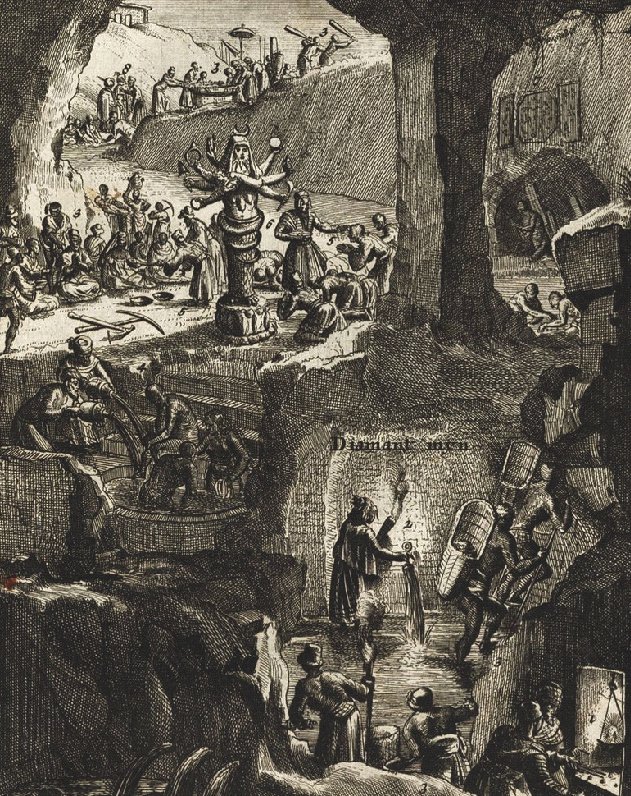
Muhammad Said was born in or around 1591 to a poor oil merchant in a village near Esfahan in central Persia. Despite his poverty, he gained some education, an acquisition that was to serve him well during his career in India where there was much demand for such educated persons. In Esfahan, he became a clerk to a diamond merchant who had links with Golconda, the diamond capital of the world at the time. The knowledge about diamonds was invaluable for his future trading and political career in Golconda.
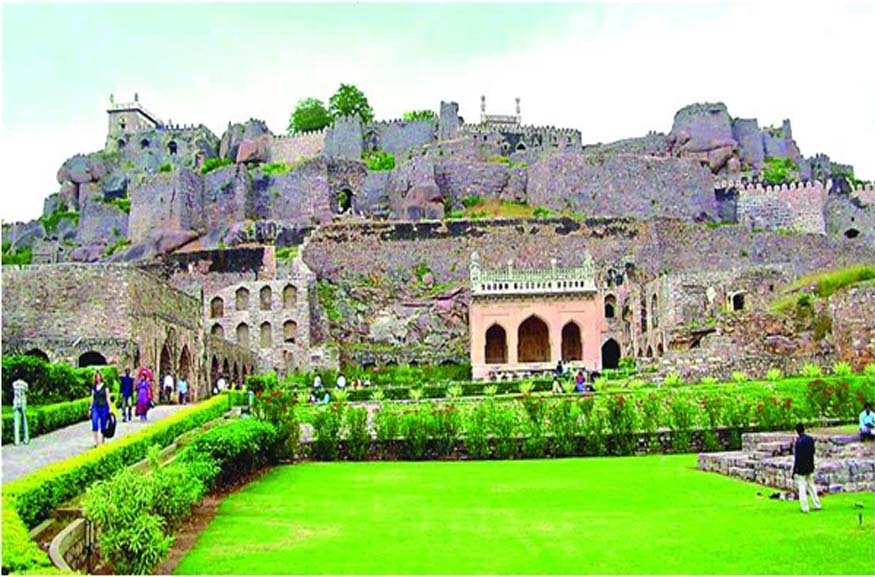
He left Persia for the Deccan sometime between 1625 and 1630, in his words, to make a secure livelihood, to help his relatives and to escape the torments of a local religious scholar. He was aged anywhere between 35 and 40 years. At this time, he was in the service of a horse trader in Esfahan – these creatures being a most profitable export from Persian ports to the Deccan. Initially on arrival in Golconda, according to Manucci, he went from house to house to sell shoes. He therefore made a struggling start in India. Golconda State, comprising parts of the modern Indian states of Telangana and Andhra Pradesh, was then ruled by the Qutb Shahi dynasty from a fort that bore the name of the State and is located on the western edge of Hyderabad city.
Soon however, he was attracted towards the vast diamond trade of the city and joined a local merchant. He rose rapidly in wealth and fame. Employing his knowledge from his experience in Persia, he started his own trade in diamonds. He used the profits to buy rights to operate some of the most lucrative mines. It is reported that he ultimately owned a few sacks full of diamonds. His trade prospered in many other fields as his fame grew in the Qutb Shahi kingdom. He purchased a number of ships that he employed in the promotion of his trade. His rise in international trade coincided with the decline of the Portuguese in India (the Portuguese fleet was defeated by the British Navy in 1588) and the rise of the British and the Dutch naval powers. However, Muhammad Said soon realized that in the corruption and nepotism-ridden Golconda State, he needed the full backing of the court to protect his business interests. He therefore entered state service as a middle-level functionary.
Due to his diligence, he was noticed by the reigning Mir Jumla, i.e. the Prime Minister, who appointed him in the higher positions of the state bureaucracy. In 1635-6, he was elevated to havaldar -in charge- of Masulipatam port, the busiest and the most lucrative port of the Kingdom. It was the one of the production centres of the famed printed multicoloured cotton cloth called chintz. The port received ships from up and down country, Arabia and south east Asia as far as China. However, the affairs of the port were in a poor state, with local officials pocketing much of the revenue otherwise due to the state.
Muhammad Said brought the administration of the port under his control, thereby increasing state revenues. He was promoted to become havaldar of an inland fort also – and his ability was noted by the Sultan, who soon promoted him to one of the highest positions of Sar-i-Khai, or the ‘head of the horse’. His duties now included civil administration, revenue functions and military affairs for the whole of the Kingdom. He was then promoted to Mir Jumla, the highest office in Golconda State, a title that he is known by in history.
By then, he commanded the complete respect of the ruler and enjoyed authority over most affairs of state. Nizamuddin Ahmad Shirazi writes in his Hadiqat us Salatin that in every task Muhammad Said himself proved to be a well-wisher of the Sultan and became his favourite. Waris remarks in his Padshahnama that Mir Jumla came to have the power of all the affairs of Qutb Shah under his control. Nothing could be done without his knowledge and approval. He became the intermediary between the Sultan and the European factions. Tavernier, wishing to sell some pearls and jewels to Sultan Abdullah Qutb Shah at Golconda, had first of all to go from Masulipatam to Mir Jumla at Golconda because “the King would buy nothing rare nor of high price which Mir Jumla had not first seen’’. As he was “all in all in the Golconda State” and had widespread commercial activities, foreign nations came to feel the weight of his influence. Thus, in the English factory records of December 1639, he is spoken of as “the Chief Governor under the King,” who “governed the whole kingdom.” Andrew Cogan, an envoy of the English East India Company to Golconda, observed that Mir Jumla “indeed commanded the whole Kingdom”. The British officials at the port of Swally -near Surat – put the whole thing succinctly, when in 1643-44, they described him as the “all ruling Sar-i-khail or Vizier” who governed “the king and consequently the country.”
Having observed his mettle in civil administration, Qutb Shah appointed him the general for the difficult invasion of Karnataka in the south, in 1646. Mir Jumla was 55 years of age. In a mere 15 to 20 years of his arrival from Persia, he had become the Prime Minister as well as the military commander of the Kingdom.